
The Barracuda Brick Slip System
The Barracuda Brick Slip Support system is an integrated brick slip external cladding solution developed to provide an alternative to traditional masonry while allowing the best of rainscreen cladding principles for the facing brick.
Barracuda accommodates virtually all brick types, uses proper-depth mortar joints and is not reliant on glues or resins, using a fully mechanical methodology.
A mechanically fixed brick slip system
The Barracuda rails are manufactured from stainless steel and support simple 40 mm thick cut brick slips. This thickness allows an adequately deep mortar depth, unlike many other systems where the mortar depth is insufficient.
The system is designed as a fully mechanical methodology and is suitable for supporting and securing brick slips to form the visible outer layer of the building façade. The Barracuda system can be used on structures constructed with reinforced concrete frames, steel frames and timber frames with backing walls formed from masonry, concrete and lightweight metal studwork.

How the Barracuda brick Slip System works
Step 1
Set out the supporting structure
The supporting structure is set out to the project requirements. Where the Barracuda L and T aluminium substructure is used, integral brick-course gauge tabs enable rapid and accurate positioning of the Barracuda rails.
Step 2
Install the Barracuda rails
The stainless steel Barracuda rails are mechanically fixed to the supporting structure.
Step 3
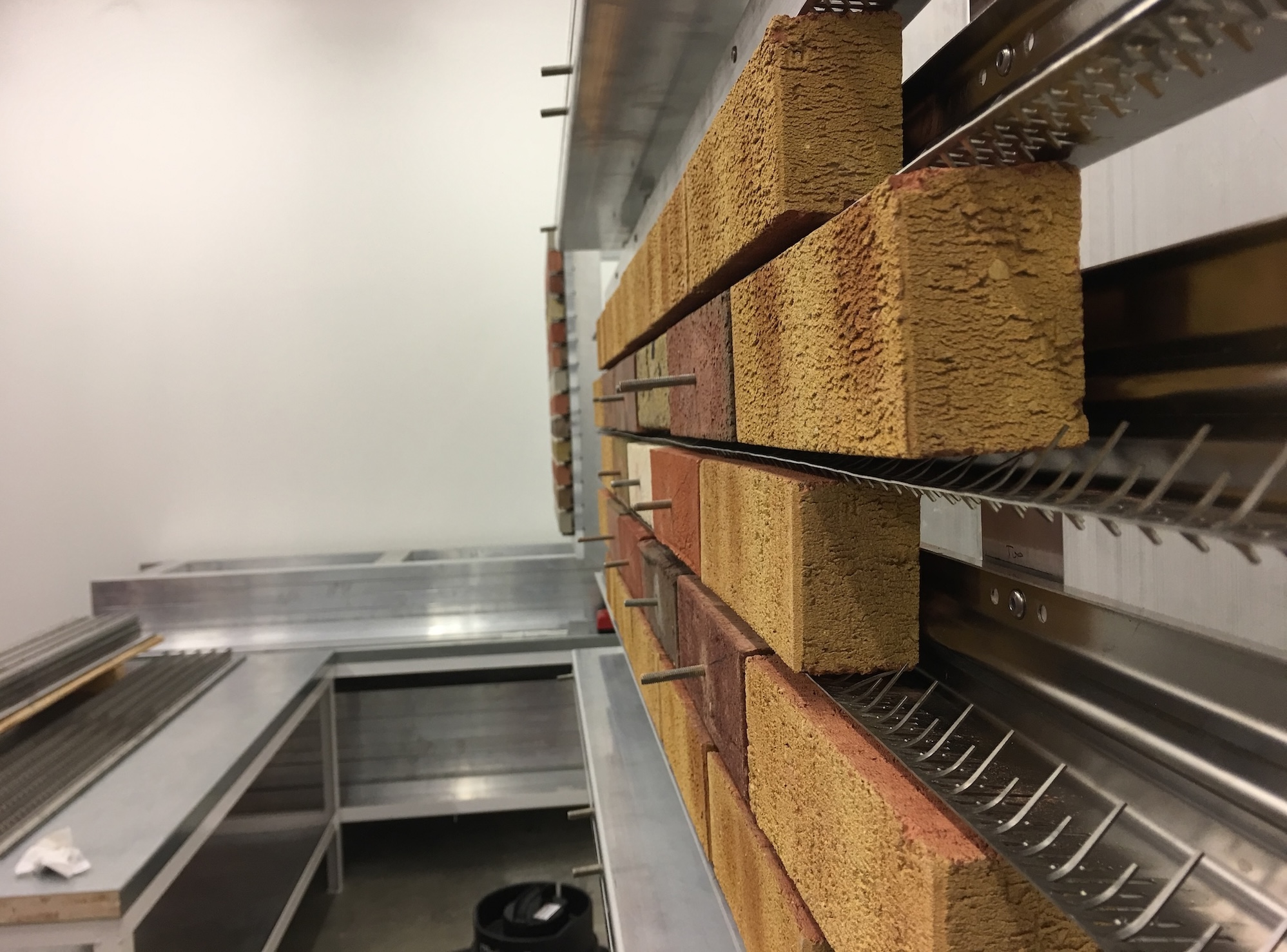
Insert the brick slips
The brick slips are a simple push fit. The variable-length teeth within the Barracuda rails bias the brick slips upwards so that their top surfaces are correctly aligned.
Step 4
Mortar the joints
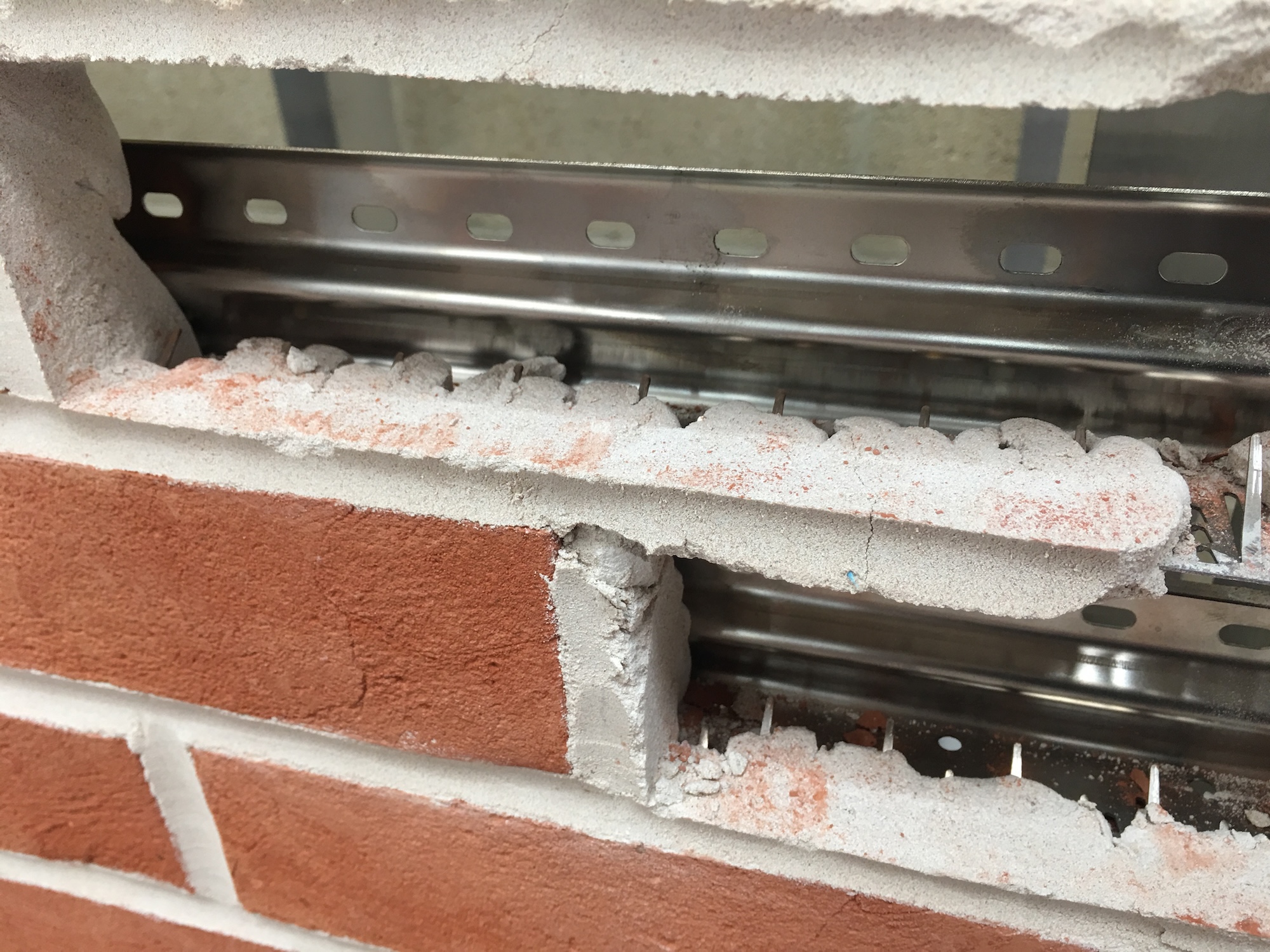
With the brick slips fully inserted into the Barracuda brick slip support system and in their finalised position, mortar is injected into the perpend and bed joints between the brick slips. The mortar envelopes the teeth on the Barracuda rails and is locked into place.
Compatible with virtually all brick types
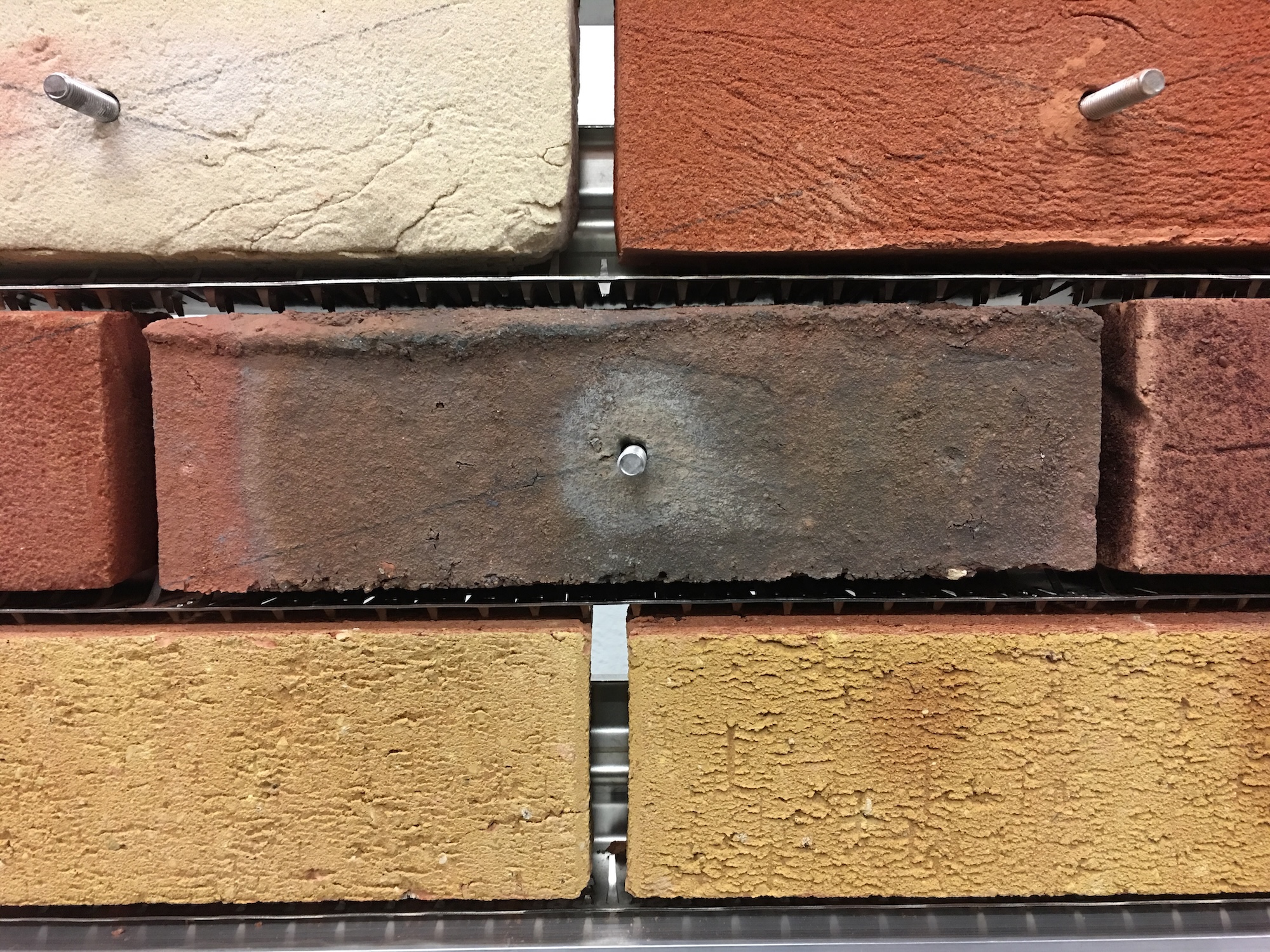
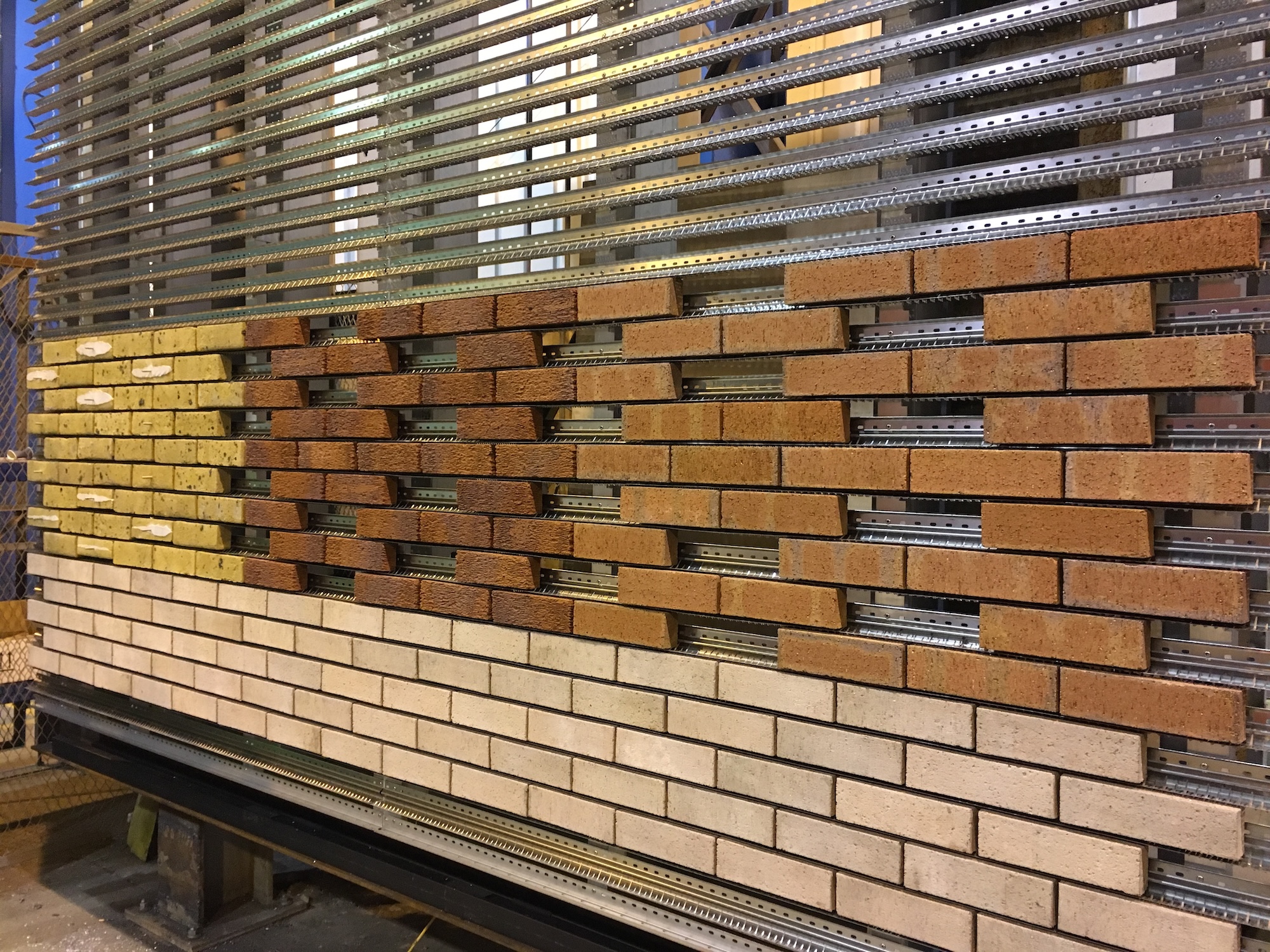
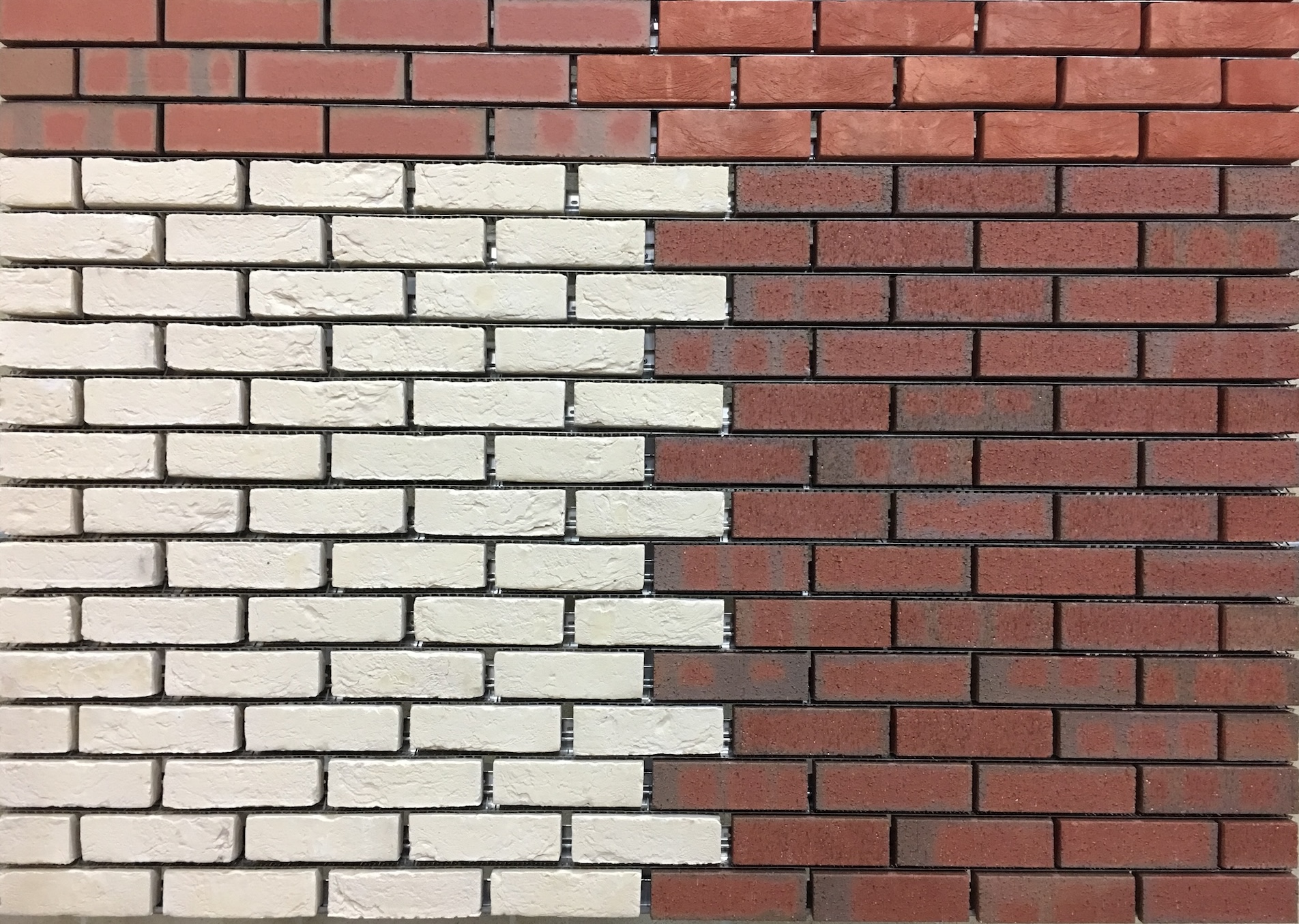
The Barracuda system can accommodate bricks of virtually any shape or type from a wide range of brick manufacturers.
This includes bricks with large frogs, large core holes, numerous smaller core holes and solid bricks. The bricks can be extruded, pressed or handmade.
Many other brick slip systems are limited by the range of bricks offered or require a special, purpose-extruded shape.
Where the choice of brick allows, stock bricks and handmade bricks can be cut so that each parent brick produces two slips.
This gets close to halving the cost of the brick slips.
Brick size manufacturing tolerances
The Barracuda system can accommodate the wide range of brick-size manufacturing tolerances stipulated within BS EN 771-1.
Real bricks can, and often do, exhibit a very wide range of dimensional variation. Of particular relevance are variations in brick height or distortions of the brick that affect brick height.
Some alternative systems tackle this by restricting brick choice to more tightly toleranced purpose-extruded bricks or through complex cutting and regularisation.
Key system benefits
Any type of brick
Compatible with virtually all bricks of any shape or size, from all manufacturers.
Automatic levelling
Designed to look like traditional brickwork
There is currently nothing like the Barracuda brick slip cladding system on the façade market.
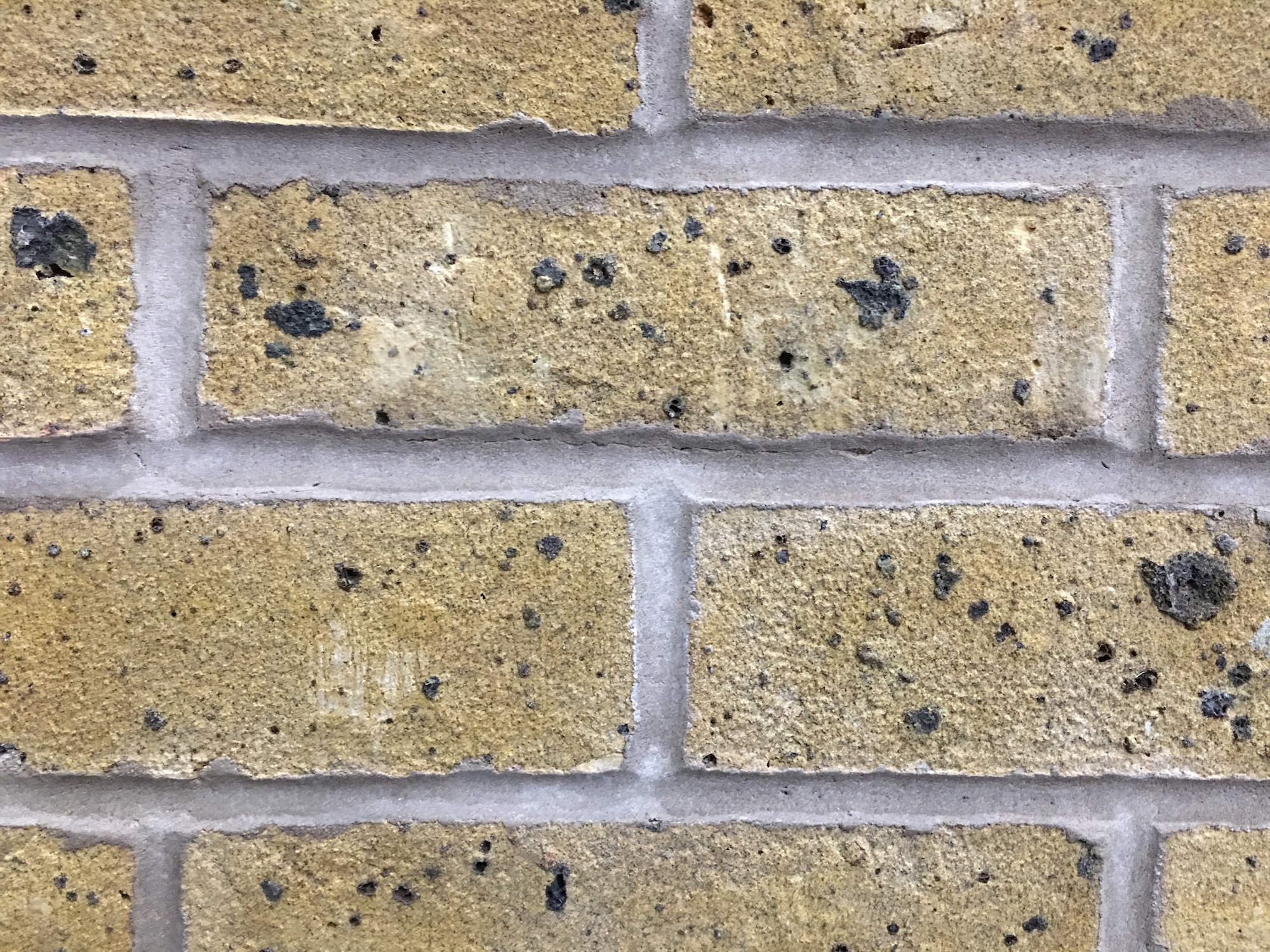
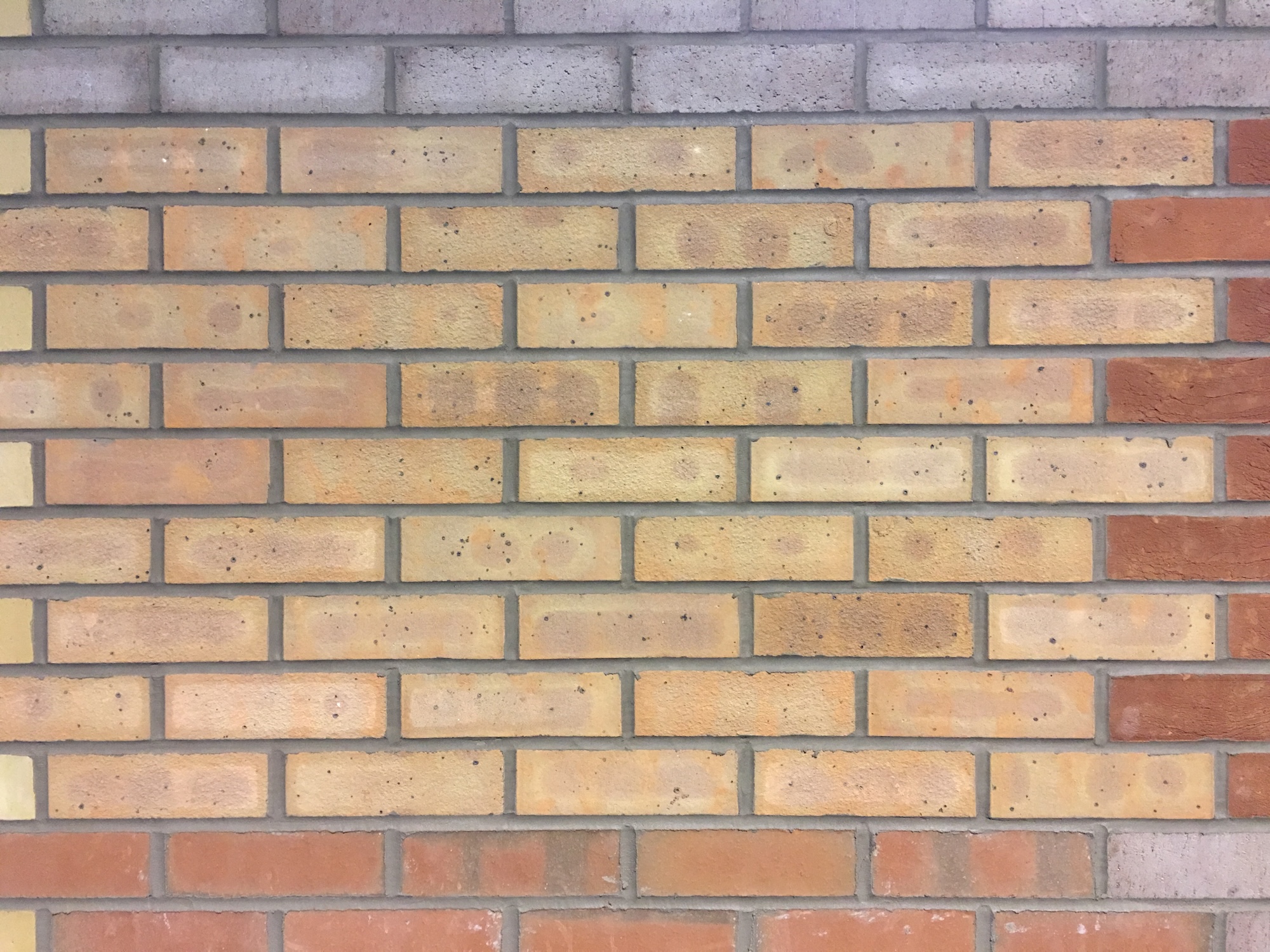
Very importantly, the system aligns the top of each brick slip, as is the case with traditional brickwork, and incorporates proper corner and reveal bricks that are not cut and bonded. The variable length teeth within the Barracuda rails force the brick slips upwards, aligning the top surfaces so as to be indistinguishable from traditional brickwork. Most other systems align the bottom surfaces of the brick slips and therefore never have the appearance of real brickwork.
Mortar retention and secure slip retention
The Barracuda system uses the mortar to securely retain the brick slips.
The mortar forms an effective shear key with the lateral surfaces of the brick slip and the mortar is secured to the substructure or backing wall by the teeth which project from the Barracuda profile.
The Barracuda system securely retains the mortar within the joints.
The mortar is locked into place by enveloping the teeth.
Temporary un-mortared performance
Traditional brickwork is, of course, mortared as it is laid.
Brick slip systems are almost always first fitted with brick slips and then subsequently mortared. This means that brick slip systems are often left temporarily un-mortared.
Because we can never be certain when a façade might encounter extreme wind-storm conditions, it is vital that a brick slip system, in its temporary un-mortared state, performs safely during these conditions.
Testing of the Barracuda system demonstrates that un-mortared brick slips can withstand pull-out forces equivalent to wind speeds in excess of 200 mph.
How Barracuda started
This started with a wish list and it was a very long wish list.
All brick types, irrespective of tolerance, with proper-depth mortar joints, achieving Negligible Risk and Class 1 impact performance, tested beyond other systems, not reliant on glues or resins and using a fully mechanical methodology, to name but a few.
We had the eureka moment that underpins Barracuda: backward-facing stainless steel teeth of different lengths within a continuous rail.
From this starting point we developed Barracuda into an integrated system solution, patented around the world and tested fully and properly. This testing includes the full set of standard CWCT tests, together with accelerated weathering and much more.
There can be no compromises with performance and safety and we have not made any.
The name “Barracuda” was the easy part. One word evocatively capturing both the function and energy of this unique product.
Where the system can be used
The Barracuda brick slip system is suitable for attachment to structures constructed with reinforced concrete frames, steel frames and timber frames, with backing walls constructed from masonry, concrete and lightweight metal studwork. It is suitable for use above DPC level.
This makes it suitable for a wide range of façade applications where the appearance of brickwork is required within a modern cladding build-up.
Barracuda installation
The Barracuda brick slips are a simple push fit and the system can be supplied with a complementary pre-gauged backing structure that further speeds accurate installation. Full installation information, system drawings, method statements and associated technical information are available within the Barracuda Downloads area.
Mortar and pointing
Installation / injection of mortar
Brick slips inserted into the Barracuda brick slip support system can be left un-mortared for a limited period of time until it is possible and practicable to mortar that area of brick slip façade.
Should an area of brick slip façade be left un-mortared, it is important to ensure that mechanical forces, other than those derived from the action of wind, do not dislodge or disturb the brick slips.
It is recommended that areas of un-mortared brick slips should be cordoned off to prevent access by other trades.
Brick slips installed into the Barracuda brick slip support system should be mortared as soon as it is possible and practicable to do so.
Brick slips installed into the Barracuda brick slip support system must not be left un-mortared for any longer than a two-week period.
All areas accessible to the public or site personnel beneath any area of brick slip façade must be adequately protected from falling debris during the entirety of the construction process.
With the brick slips fully inserted into the Barracuda brick slip support system and the brick slips in their finalised position, mortar must be injected into the perpend and bed joints between the brick slips.
James & Taylor recommends the use of CPI Euromix mortar M1ANPM000, or an alternative mortar with equivalent usage and performance characteristics.
There are a number of different mortar injection methods and delivery systems: entirely manual pump-type guns, electromechanical or pneumatic.
James & Taylor recommends the use of an electromechanical auger-under-hopper device because this will tend not to squeeze the water from the mix and, as a result, will be less susceptible to clogging.
James & Taylor recommends the use of the Quickpoint Plus Electric Mortar Pointing System by Sunrise Tools & Equipment, or an alternative with equivalent usage and performance characteristics.
If possible, inject mortar into the joints working down the panel from top to bottom. This will tend to keep the panel cleaner.
Inject mortar into the perpend joints first. Fill the perpend joints from the bottom upwards, making sure that the perpend joints are fully filled.
Inject a number of perpend joints first, but not too many, and then fully fill the bed joints.
It is important that the bed joints are adequately filled so that the mortar envelopes the teeth on the Barracuda rails.
Fill all joints so that they are flush or just proud of the surface of the brick slips. Fill all joints adequately so that when they are tooled off, the mortar is suitably compacted by the tooling-off process.
The mortar-joint face profile must be a shallow 22 mm or 7/8 inch bucket-handle profile.
Never inject mortar into the Barracuda brick slip support system when it is too cold, below the minimum temperature recommended by the mortar manufacturer, or when it is likely to become too cold before the mortar has adequately set.
Never mortar when it is raining unless the work area and brick slips are adequately protected from the rain.
Allow 28 days for the mortar to attain its maximum working strength.
Health, Safety & COSHH
Appropriate personal protective equipment must be worn when handling and installing Barracuda materials.
Installation teams should refer to the current Barracuda Health & Safety Guidance and COSHH information before work begins.
Installer training
When you place an order for the Barracuda brick slip external cladding system, this includes access to our installer training facilities.
We can tailor our installer training to meet each client’s unique needs and requirements.
Training typically lasts one day, including a blend of theoretical and practical aspects of the Barracuda brick slip cladding system.
Supporting specification and technical review
- Specification documents
- Testing and performance information
- Installation guidance
- System drawings
- Supporting downloads
These resources are intended to help specifiers, contractors and project teams review the system in a clear and structured way.
Frequently asked questions
What type of bricks can Barracuda accommodate?
The Barracuda system can accommodate bricks of virtually any shape or type from a wide range of brick manufacturers. This includes bricks with large frogs, large core holes, numerous smaller core holes and solid bricks. Bricks can be extruded, pressed or handmade.
Does Barracuda rely on glues or resins?
No. Barracuda uses a fully mechanical methodology and is not reliant on glues or resins.
How are the brick slips installed?
The brick slips are a simple push fit and the system can be supplied with a complementary pre-gauged backing structure that further speeds accurate installation.
How does Barracuda align the brick slips?
The differential-length teeth bias the brick slip upwards so that its top surfaces are aligned, as is the case with traditionally laid brickwork.
What role does mortar play in the system?
The mortar forms an effective shear key with the lateral surfaces of the brick slip and is secured to the substructure or backing wall by the teeth projecting from the Barracuda profile. The mortar is locked into place by enveloping the teeth.
How long can Barracuda Brick Slips remain un-mortared?
Brick slips should be mortared as soon as it is possible and practicable to do so and must not be left un-mortared for longer than a two-week period.
Is installer training available?
Yes. Installer training can be tailored to meet individual client requirements and typically lasts one day, including theoretical and practical aspects of the Barracuda system.
How thick are the Barracuda brick slips?
Barracuda brick slips are cut to a finished thickness of 40 mm. The datum cut is taken accurately from the front face of the brick and the cuts must be planar and parallel to the front face.
View brick cutting information here.

Find out more about Barracuda
If you would like to find out more about the Barracuda brick slip system, its installation or a project requirement, please contact the James & Taylor team.